
You might think the perfect hunting property is nothing but dense timber and overgrown brush. In reality, the most valuable recreational land Southwest Iowa offers in 2026 is often a strategic "combo tract" that balances habitat with income-producing tillable acres. Owning a piece of the Loess Hills or a quiet Page County creek bottom is a dream for many families, yet the fear of buying a property with poor habitat or restrictive land-use rules can be paralyzing. You want a legacy property that your kids will enjoy, but you also need to know that your investment is secure and manageable from a distance.
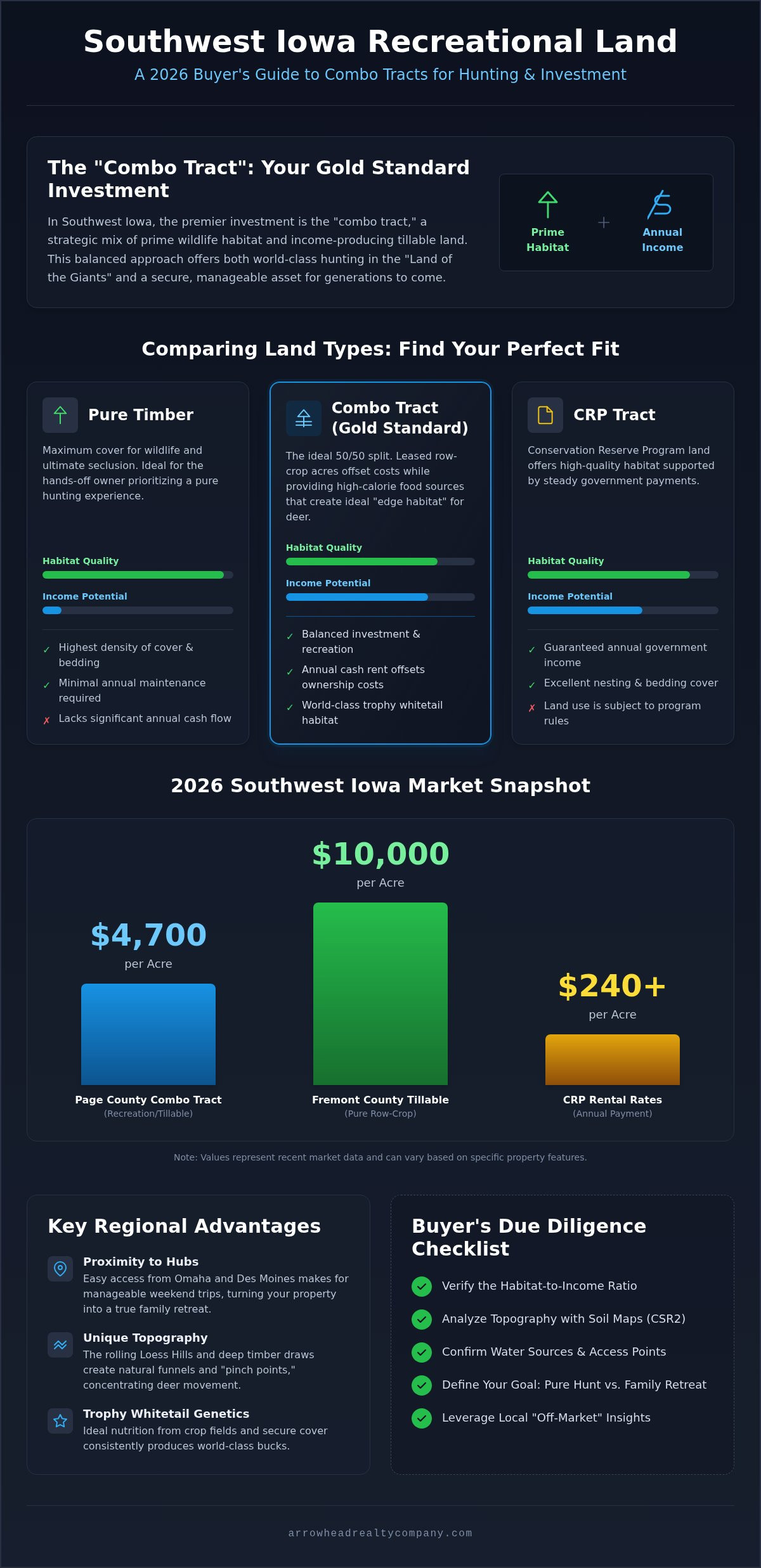
We're here to help you navigate those uncertainties with the confidence of a local expert. In this guide, you'll discover how to evaluate different land types, from CRP-heavy tracts with rental rates reaching over $240 per acre to prime timber draws in the new hunting zones. We'll compare the latest 2026 market data, including recent Page County sales near $4,700 per acre, to help you find the right balance of sport and stability. By the end of this comparison, you'll have a clear path toward securing a high-quality hunting spot that serves your family for generations.
Key Takeaways
- Learn why the "combo tract" is the gold standard for recreational land Southwest Iowa buyers looking to balance premier hunting with reliable annual income.
- Identify the specific geographical features, like timber draws and creek bottoms, that have earned this region its reputation as the "Land of the Giants" for trophy whitetail.
- Master the essential due diligence steps, including how to use CSR2 ratings and soil maps to ensure your investment holds its value for future generations.
- Determine whether a pure hunting tract or a multi-purpose family retreat better fits your lifestyle and long-term legacy goals.
- Discover how leveraging local market reports and "off-market" insights can help you find the best property before it hits the national platforms.
Why Southwest Iowa is the Premier Choice for Recreational Property
Recreational land Southwest Iowa is more than just a place to park a camper or hang a deer stand. It represents a strategic investment in a region where the geography itself dictates the quality of the experience. Unlike the flat, monoculture fields of central Iowa, the southwest corner offers a rugged, diverse landscape that serves as a sanctuary for wildlife. It's often called the "Land of the Giants" because the genetics and nutrition found in these counties consistently produce world-class trophy whitetail. This reputation draws hunters from across the country, but the real advantage belongs to those who live close enough to manage the land year-round.
The proximity to major hubs like Omaha and Des Moines makes this region particularly attractive for weekend warriors. You can leave your office on a Friday afternoon and be in your tree stand before sunset. This ease of access ensures your property remains a family retreat rather than a distant burden. Whether you're looking for a legacy tract or a high-quality hunting spot, the transition from the Loess Hills of Southwest Iowa to the fertile Nodaway River valley provides a variety of habitats that are hard to find elsewhere.
The Unique Topography of Page and Fremont Counties
The rolling hills and deep draws of Page and Fremont counties define the western edge of the region. These natural formations are more than just scenery; they create predictable "pinch points" that funnel deer movement right past your blinds. Reliable water sources are everywhere, from hidden creek systems to the established East Nishnabotna River bottom. The "edge effect" in SW Iowa land creates a biological crossroads where timber meets crop fields, providing the ideal combination of high-calorie food sources and secure bedding cover that trophy whitetail crave.
Recreational Value vs. Agricultural Utility
When you evaluate property in Shenandoah or Clarinda, you'll notice a distinct difference between agricultural utility and recreational value. While a farmer looks for flat, black soil, a hunter looks for the "unfarmable" corners. Buying recreational land Southwest Iowa means prioritizing deep timber draws, steep ridges, and overgrown thickets. These are the highest value assets for a sportsman because they offer the privacy and security that mature bucks require.
Recent data shows that even "recreation/tillable" combo tracts in Page County can command around $4,700 per acre, while pure tillable ground in Fremont County has reached $10,000 per acre. Finding the right balance between privacy and road access is crucial. You want a property that feels secluded but remains accessible during a muddy Iowa spring. If you're also considering the long-term potential of row-crop production, explore our Iowa Farmland for Sale: 2026 Agricultural Investment Guide to see how tillable acres complement a recreational tract.
Comparing Land Types: Timber, Tillable, and CRP Combinations
Choosing the right recreational land Southwest Iowa offers requires a clear understanding of your financial and hunting goals. Most properties in our region fall into three primary categories, each offering a different balance of habitat quality and investment return. Pure timber tracts provide the highest density of cover and require the least amount of active management, making them ideal for the hands-off owner who prioritizes seclusion. However, these tracts typically lack the annual cash flow that helps some buyers justify a larger purchase. The "Tillable Mix" solves this by incorporating row-crop acres that you can lease to local operators, while CRP tracts offer a middle ground for conservation-minded buyers.
- Pure Timber: Maximum cover for wildlife with minimal maintenance requirements, though it offers lower annual income.
- The Tillable Mix: Row-crop acres that provide annual cash rent to offset ownership costs and provide high-calorie food for wildlife.
- CRP Tracts: High-quality habitat supported by steady government payments, with over 186,247 acres accepted into the program across Iowa for 2026.
The Financial Advantage of Combo Tracts
A 50/50 split between timber and tillable ground is often considered the gold standard for both wildlife management and investment stability. With average cash rents for Iowa cropland hitting $270 per acre in 2026, even a modest tillable field can provide significant financial relief. It's a proactive way to ensure the land helps pay for itself while you enjoy the hunt. In many counties, CRP payments, which are estimated between $150 and $300 per acre for 2026, can effectively cover the property taxes on your recreational ground. If you're curious about the current rental potential of a specific area, you can review our latest market reports for a detailed breakdown of local values.
Habitat Quality Comparison
Habitat quality depends on diversity and seasonality. Mature hardwood timber, specifically Oak and Hickory, provides the essential mast crops that keep deer on your property through the late fall. In contrast, thick cedar stands offer crucial thermal bedding during the brutal Iowa winters. You should also evaluate the balance between bottomland and upland. Bottomland tracts near creek systems are magnets during the early season, while upland ridges are where you'll find the most action during the rut. While Iowa's Wildlife Management Areas offer excellent public access, a private tract allows you to curate this habitat through strategic food plots. Checking the soil quality for these plots is vital; even recreational buyers should look at CSR2 ratings to ensure the ground can support high-protein forage throughout the year.
Hunting Tracts vs. Family Retreats: Which Investment Fits Your Lifestyle?
Choosing between a hard-core hunting tract and a multi-purpose family retreat is the first major decision you'll face when exploring recreational land Southwest Iowa. While these goals often overlap, the features you prioritize will fundamentally change your search criteria. A "Hunting First" buyer focuses on the strategic layout of the land. They look at prevailing wind directions for stand placement and evaluate how neighbors manage their own timber draws. If the surrounding properties are heavily hunted, your tract becomes a sanctuary, but if they are managed for age structure, your trophy potential skyrockets.
Conversely, a family retreat prioritizes the human experience. You aren't just looking for deer sign; you're looking for the perfect spot to watch a sunset from a wrap-around porch. We've seen a surge in "cabin-ready" acreages across the region because more buyers want a place where they can escape the city without sacrificing comfort. These properties often feature existing trail systems for hiking or cleared areas ready for a modern lodge. Identifying your primary intent early prevents you from overpaying for features you won't use or missing out on the legacy property your family deserves.
Evaluating Build Sites and Utilities
If you plan to build, you must verify utility access early in your due diligence. In Page County, checking for rural water and electricity at the road is essential; bringing these services deep into a property can be a significant expense. You'll also need to navigate local zoning. Most recreational land is zoned A-1 (Agricultural), which generally allows for a single-family dwelling or a seasonal cabin, but you should always confirm specific county setbacks and road frontage requirements. Ensuring all-weather access is equally important. An abandoned "B" road might look charming in July, but it's a different story when you're trying to reach your cabin in a snowy January. If you find yourself wanting to be closer to town while still enjoying the local lifestyle, our Homes for Sale in Shenandoah, IA: 2026 Living Guide offers a great perspective on community living.
Recreational Activities Beyond Hunting
The beauty of Southwest Iowa's topography is that it supports more than just the hunt. The steep ridges and rolling valleys of the Loess Hills provide an incredible backdrop for ATV and trail riding. When evaluating a property for these activities, consider the safety of the grade and the durability of the soil. Managing private ponds is another popular goal. Whether you're stocking largemouth bass or creating a wetland for waterfowl, you can use the Iowa DNR Private Lands Program to get technical advice on habitat restoration. This program is an excellent resource for landowners who want to maximize the natural beauty and ecological health of their retreat beyond the deer season.
The Buyer’s Due Diligence Checklist for Iowa Recreational Real Estate
Securing the right recreational land Southwest Iowa offers involves more than just walking the timber draws and checking for deer sign. While the emotional pull of a legacy property is strong, a professional transaction requires a technical approach to ensure your investment is sound. You don't want to discover a boundary dispute or an access issue after the closing. Following a methodical checklist protects your equity and ensures the land performs exactly as you expect. This is a critical step for anyone investing in recreational land Southwest Iowa has to offer, as it helps you avoid the common pitfalls of rural ownership.
- Soil Productivity: Review CSR2 ratings to understand the land's inherent value and food plot potential.
- Legal Boundaries: Confirm fence lines and property corners through a professional survey.
- Access Rights: Verify recorded easements and ensure the property isn't landlocked.
- Existing Agreements: Review any active farming, hunting, or conservation leases that convey with the deed.
Understanding CSR2 and Land Value
Even if you never plan to plant a commercial crop, the Corn Suitability Rating 2 (CSR2) is vital to your property's market value. Essentially, the CSR2 is a numerical index that measures the potential productivity of a soil type based on its physical properties and local environmental factors. A higher CSR2 rating directly increases the resale value of recreational land because it preserves the option for agricultural use. Beyond the financial aspect, you can use this soil data to plan successful food plots. Knowing which areas have high-quality soil allows you to plant high-protein forage that will keep wildlife on your property throughout the winter months.
Legal and Access Considerations
Iowa’s "partition fence" law is a unique aspect of rural ownership that new buyers must understand. Generally, this law requires neighboring landowners to share the cost and maintenance of a legal fence. It often follows the "right hand" rule, where you are responsible for the right half of the fence as you face the boundary line from your property. You should also be diligent about identifying recorded versus prescriptive easements. A recorded easement is clearly found in a title search, while a prescriptive easement is an unrecorded right created by long-term, visible use of the ground by others.
Don't forget to verify mineral rights and the potential for wind or solar leases. These can provide unexpected income streams or, conversely, create restrictions on how you use the surface of your land. If you're ready to dive into the specifics of a particular county, we invite you to request a custom market report to see how these factors are currently influencing land prices in our region.
Navigating the Southwest Iowa Land Market with Arrowhead Realty Company
Finding the right parcel of recreational land Southwest Iowa offers requires more than just browsing public listings. In tight-knit communities like Shenandoah and Clarinda, the best opportunities often move through local networks before they ever hit a national portal. This is where having a professional neighborly guide becomes your greatest asset. We live and work in these creek bottoms and timber draws every day. This local immersion gives Arrowhead Realty Company the inside track on off-market deals and upcoming opportunities that general practitioners simply won't find. If you want to secure a high-quality hunting spot, you need a partner who knows the soil and the neighbors just as well as the market data.
Arrowhead Realty Company combines this deep regional knowledge with modern marketing strategies and extensive reach. You get the best of both worlds: a local expert who knows the history of a specific Page County farm and a modern facilitator who uses advanced technological tools to streamline your transaction. We often find that our live real estate auctions and online real estate auctions are the most effective ways to secure unique recreational ground. These platforms provide a transparent, competitive environment that ensures you're paying fair market value for a truly one-of-a-kind property.
The Benefit of a Land-Specialist Broker
Why settle for a general residential agent when you can work with a dedicated land specialist? A residential agent might focus on the home's square footage, but they often miss critical land-use issues like expiring CRP contracts or complex partition fence laws. Arrowhead Realty Company evaluates the "recreational ROI" of every tract, looking at how habitat quality and potential rental income from tillable acres affect your long-term equity. We provide the accuracy and speed you need to act when the right property appears, ensuring you have the data required to make a competitive offer.
Starting Your Southwest Iowa Land Search
You don't have to navigate this complex process alone. Our website features powerful online tools that allow you to filter properties by specific recreational features, from timber density to water access in the Nodaway River valley. As you prepare your financing, we can point you toward trusted local ag-lenders who specialize in recreational loans and understand the unique appraisal requirements of Iowa land. Once you're ready to see the dirt for yourself, the next step is setting up a personalized land tour and a professional valuation. Arrowhead Realty Company is here to ensure your legacy property is a sound investment from day one.
View our current recreational land listings in Southwest Iowa and take the first step toward owning your piece of the "Land of the Giants!"
Secure Your Legacy in the Loess Hills
Owning a piece of the Iowa landscape is about more than just the hunt; it's about building a legacy that lasts for generations. You've discovered how the unique topography and strategic location of the region create world-class opportunities for sportsmen. By balancing habitat quality with the financial stability of income-producing ground, you can own a property that truly pays for itself. Finding the right recreational land Southwest Iowa has to offer requires a methodical approach, from checking CSR2 ratings to verifying access easements. Don't leave your investment to chance when local expertise is right around the corner.
Arrowhead Realty Company is deeply rooted in our Shenandoah and Clarinda communities. As a member of the United Country Real Estate network, we offer the perfect blend of local insight and national reach. We're experts in both private treaty sales and land auctions, giving you a distinct advantage in a competitive market. If you're ready to take the next step toward your own family retreat, we're here to guide you home. Contact Arrowhead Realty Company to find your Southwest Iowa recreational retreat and start your journey today!
Frequently Asked Questions
Is recreational land in Southwest Iowa a good investment compared to the stock market?
Recreational land offers a tangible asset that can diversify your portfolio and hedge against inflation. While the stock market is liquid, land values in the Southwest Iowa crop reporting district saw a 1.0% increase in the six months leading to March 2026. This appreciation, combined with the personal utility of a hunting tract, makes it an attractive alternative for long term investors looking for stability and a legacy for their families.
Can I build a cabin on any recreational land I buy in Page County?
You can usually build a cabin, but zoning and utility access are the deciding factors. Most land in Page County is zoned A-1, which generally permits seasonal structures or a single family home. You must verify that the specific parcel has legal road frontage and access to rural water or electricity. Consulting with the county planning and zoning department early in your due diligence ensures your building plans meet all local setbacks.
What is the average size of a recreational tract in the Shenandoah area?
Recreational tracts in the Shenandoah area typically range from 40 to 160 acres. These sizes are common because they follow the historical subdivision of Iowa farmland. Smaller lifestyle acreages of 10 to 20 acres do appear occasionally, while larger properties over 200 acres usually function as combo tracts. These larger parcels often balance significant timber draws with tillable acres to maximize both hunting quality and annual income.
Do I need a special loan to buy recreational or hunting land?
You will likely need an agricultural or land specific loan rather than a traditional home mortgage. Standard residential lenders often don't have the tools to value raw land or timber tracts properly. Ag lenders typically require a down payment between 20% and 35% for recreational land Southwest Iowa buyers. Working with a local lender who understands the regional land market can often lead to more favorable terms and a smoother closing process.
How much are property taxes on recreational land in Southwest Iowa?
Iowa assesses agricultural and recreational land based on its productivity and earning capacity rather than its market value. This method uses a five year rolling average of crop yields and prices to determine value. Additionally, the statewide aggregate taxable value for agricultural property is capped at a 3% annual increase. This system often results in lower tax burdens for landowners compared to residential properties, which are assessed at 1.33% of their market value.
What is the Iowa Habitat and Access Program (IHAP) and should I join it?
The Iowa Habitat and Access Program provides financial and technical assistance for habitat restoration in exchange for public hunting access. Joining this program is a strategic way to improve your land's wildlife potential without bearing the full cost of seed and labor. However, you must weigh the benefit of these improvements against the requirement of allowing public hunters on your property during the state's designated seasons.
How do I manage my recreational land if I live out of state?
Successful out of state management relies on building a strong local network. Many owners lease their tillable ground to a local farmer who can monitor the property and maintain fence lines. You can also hire a professional land manager to oversee habitat projects like food plots or timber stand improvement. This approach ensures your investment is protected and your habitat is thriving even when you can't be there personally.
What is the best time of year to walk and buy recreational property?
Late winter and early spring, specifically February and March, are the premier times to walk a property. Without the summer canopy, you can easily identify deer travel corridors, bedding thickets, and the true layout of the ridges. This timing also allows you to finalize a purchase and close in time to get food plots or CRP plantings in the ground before the growing season begins. It's the best way to prepare for fall.


