
What if the most noticeable issue in a Shenandoah home isn’t the one that deserves the closest follow-up? A cracked tile may be routine wear, while a small sign of moisture could prompt more questions. A home inspection checklist Shenandoah Iowa buyers can use helps you look beyond first impressions and focus on what each finding may mean.
It’s understandable to wonder what a standard inspection covers, especially when you’re considering an older home or a property with acreage. This room-by-room guide will help you prepare, follow the inspection, and review the report. It also explains which findings may call for evaluation by a qualified specialist. Use it to organize questions, not as a substitute for a professional inspection.
We’ll cover the home’s structure, exterior, drainage, and major systems, then show how to sort observations into practical next steps. Whether you’re looking in Shenandoah or Clarinda, keep notes tied to the inspector’s report and ask your real estate agent about transaction questions. Leave technical judgments to the inspector and appropriate specialists.
Key Takeaways
- Use the home inspection checklist Shenandoah Iowa buyers need to organize observations across the home’s structure, exterior, and drainage.
- Understand what a visual inspection can tell you, and where it stops short of a specialist diagnosis or repair estimate.
- Sort report findings into routine upkeep, concerns to investigate, and items that may need timely follow-up.
- Follow a clear before, during, and after inspection process to keep questions and next steps on track.
- Compare inspectors by scope, relevant experience, sample reports, and communication, then discuss transaction questions with your real estate agent.
What a Shenandoah, Iowa home inspection checklist can, and cannot, tell you
A home inspection can help you understand a property’s visible condition, but it can’t guarantee that problems won’t appear later. Think of it as a snapshot, not a pass-or-fail verdict. A useful home inspection checklist Shenandoah Iowa buyers can follow helps organize observations and questions. The inspector reports on conditions they can see and access, rather than predicting every future repair.
A home inspection is a visual review of a home’s accessible components at a specific point in time, intended to inform a buyer about observed conditions, not provide a guarantee, specialist diagnosis, or complete repair estimate. For a general overview of a home inspection, see the broader description of its purpose and limitations. Your inspector’s written agreement is the best guide to the services included for your property.
What does a general home inspection usually cover?
Depending on the agreed scope, an inspector commonly reviews visible and accessible parts of the structure and foundation, exterior, roof, plumbing, electrical systems, and heating or cooling equipment. The report records observed conditions on inspection day. It may describe a concern without establishing its precise cause or estimating the cost to correct it.
Before the appointment, read the written scope and ask what’s included, excluded, or available as a separate service. Check the property’s features against that scope. If the home has a detached building, private well, septic system, or another specialized component, confirm whether it will be evaluated or needs separate attention.
What is outside a standard inspection’s scope?
Inspectors generally can’t assess areas they can’t safely access or see, such as concealed wiring, covered structural elements, or blocked portions of a roof or foundation. A visual review also isn’t the same as technical testing or diagnosis. If an observation raises a specific concern, a qualified specialist may need to investigate and recommend next steps.
Scope can vary with the inspector, property, agreement, accessibility, and services requested. Age and maintenance history can help shape questions: an older system or signs of past repair may warrant a closer look, but neither alone proves a defect. Note the inspector’s exact observations, ask what they mean, and clarify what remains uncertain. Leave technical conclusions to the inspector or relevant specialist, then discuss transaction questions with your real estate agent.
Shenandoah home inspection checklist: review the structure, exterior, and drainage
Use the walk-through to gather clear observations, not to diagnose defects yourself. The home inspection checklist Shenandoah Iowa buyers use should help you follow the inspector’s comments, note questions, and understand which areas may need more attention. An older feature or visible mark isn’t automatically a problem. Its significance depends on context, condition, and the inspector’s assessment.
Foundation, basement, roof, and exterior checklist
Ask the inspector to explain any reported cracks, signs of moisture, roof concerns, or areas of the structure they couldn’t access. Outside, ask about grading, gutters, downspouts, and where water flows in relation to the home. Note comments about siding or other exterior finishes, windows, and doors.
A crack, stain, uneven surface, or peeling finish is a clue to ask about, not a diagnosis by itself. Its location, pattern, condition, and surrounding evidence affect what it may mean. If the home has older materials or signs of past repairs, record the inspector’s explanation and ask whether further assessment is advisable. InterNACHI’s home inspection standards of practice offer another reference for common inspection areas, though your inspector’s written scope governs the appointment.
- Ask whether the inspector observed evidence of water entry and where it appeared.
- Find out whether roof or exterior areas were inaccessible and why.
- Record recommendations for monitoring, maintenance, or specialist follow-up.
Plumbing, electrical, and heating or cooling checklist
For interior systems, ask what the inspector observed about visible plumbing, fixtures, drainage, and water-heating equipment. Clarify any noted leaks, unusual operation, or testing limitations. For electrical components, note observations about the panel and visible wiring, along with any safety recommendations. Ask how the heating and cooling equipment operated during the inspection, what condition was apparent, and whether weather, access, or another factor limited testing.
Keep notes specific. “Inspector reported a damp area near the basement wall” is more useful than “foundation failure.” The same applies to a system concern. A reported symptom may justify a closer look, but technical conclusions belong to the inspector or an appropriate qualified specialist.
If the property includes a private well, septic system, detached structure, or another rural feature, ask whether it falls within the inspection scope. These systems may need separate assessment. Your real estate agent can help you discuss report findings and transaction questions. Local Shenandoah real estate guidance can help keep those conversations connected to the purchase process.
Which Shenandoah inspection findings deserve follow-up, not panic?
An inspection report is a decision aid, not an automatic pass-or-fail verdict on a home. A note may point to routine upkeep, a concern that needs more context, or a condition that merits prompt specialist attention. The home inspection checklist Shenandoah Iowa buyers use is most helpful when it turns report language into clear questions rather than conclusions drawn without evidence.
Use the categories below as a starting point. These examples are illustrative, not claims about any particular property. The significance of an observation depends on the inspector’s findings, the home’s condition, and advice from a relevant professional.
| Finding category | Useful question | Possible next step |
|---|---|---|
| Routine maintenance | Is this an upkeep item, and what should I monitor? | Clarify timing and add it to a maintenance plan. |
| Material concern | What evidence supports this comment, and what remains uncertain? | Ask the inspector to explain the observation and whether more evaluation is warranted. |
| Potentially urgent concern | Does the inspector recommend prompt action or a specialist review? | Seek relevant professional advice and discuss transaction implications with your agent. |
How to prioritize items in the inspection report
Start with safety-related comments, active water concerns, and major systems the inspector flagged. Then separate questions needing timely answers from ordinary maintenance and cosmetic observations. Don’t assume a brief report phrase tells the whole story. Ask the inspector to explain unfamiliar terms, identify the evidence behind a comment, and clarify recommended follow-up or inspection limitations.
For example, a report might note a water stain or a system that didn’t operate as expected. Those observations alone don’t establish the cause, extent, or repair needed. Ask what the inspector could verify and what remains uncertain.
When to ask for a specialist evaluation
If the inspector recommends further evaluation, ask what kind of qualified professional should assess the concern and what question that evaluation can answer. This helps clarify whether there is a specific diagnostic need or remaining uncertainty. If the property has a private well or septic system, ask whether it was included in the inspection scope or needs separate assessment.
For radon, wells, septic systems, or other testing, check current authoritative state or local guidance rather than assuming a test is included or required. Your real estate agent can help you discuss report findings and transaction questions. Technical conclusions should come from the inspector or relevant specialist.
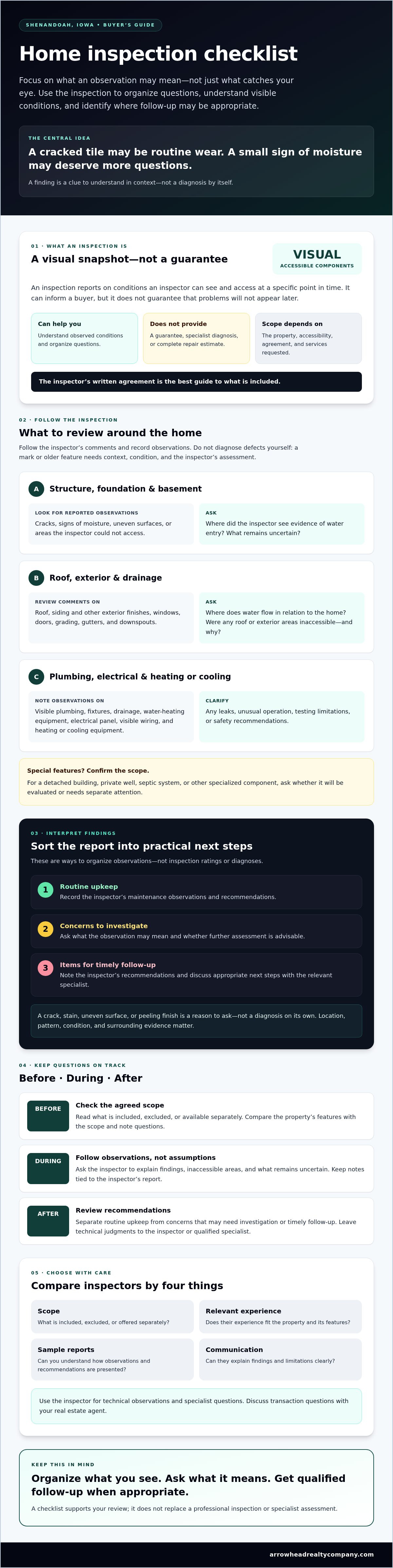
A buyer’s Shenandoah home inspection checklist for before, during, and after
A clear process keeps the inspection useful and helps you stay organized as purchase decisions move forward. Use this home inspection checklist Shenandoah Iowa buyers can adapt to the property, and coordinate attendance and access with the relevant transaction participants.
Before and during the inspection
- Confirm the appointment and scope. Review the inspection agreement, the areas and systems included, and any limits on access or testing. Ask how access will be arranged. Note features such as a detached structure or private well that you want to ask about.
- Prepare a short question list. Prioritize areas you want the inspector to explain, including concerns raised by the property’s history or features. Share questions through the agreed process so the inspector can address them during the visit if appropriate.
- Listen and take factual notes. If you attend, record the inspector’s observations and explanations, along with report terms or locations to revisit. Ask what couldn’t be accessed or tested and how that limitation will appear in the report. Don’t try to diagnose a technical condition yourself.
After receiving the inspection report
- Sort findings into next steps. Group them as questions for the inspector, recommended evaluations for an appropriate professional, or maintenance items to plan for. Keep the report’s wording and page references with each note.
- Follow up with the right person. Ask the inspector to clarify observations or recommendations. Direct technical questions to a qualified specialist, and discuss transaction questions with your buyer’s agent.
- Check the agreement and act promptly. Review applicable inspection and response deadlines in your purchase agreement with your agent. Your options and timing depend on that agreement, so don’t assume a standard timeline or treat this checklist as legal advice.
Prepare, clarify, and follow up: review the scope before the appointment, ask what the inspector observed, then organize professional and transaction-related next steps.
For help connecting inspection findings to questions about your Shenandoah home purchase, discuss the transaction with a local real estate agent.
Choosing an inspector and moving forward with a Shenandoah home purchase
Choose an inspector whose scope and communication fit the property, not simply the one with the shortest checklist. Use your home inspection checklist Shenandoah Iowa notes to compare what each inspector proposes to review and how they explain limitations. Verify credentials and any applicable requirements through current, authoritative sources rather than relying on outdated summaries or assumptions.
Questions to ask before hiring a home inspector
Ask direct questions and compare the answers with the written scope. For example:
- Which areas and systems are included, and what’s excluded or subject to access limitations?
- How will you document observations, safety concerns, and areas that couldn’t be inspected or tested?
- Can I review a sample report to understand its organization and level of detail?
- What experience do you have with homes or property features similar to this one?
- How do you explain findings, and when might you recommend input from a qualified specialist?
Consider the property’s actual features when discussing additional services. A home with a private well, septic system, or detached structure may raise different scope questions than one without those features. Ask whether relevant systems are included or whether separate assessment may be appropriate. Don’t assume every buyer needs identical testing.
How a local real estate agent can help after inspection
After the report arrives, an agent can help you understand transaction communication and the processes relevant to your purchase agreement. They can help organize questions about timing and communication with other transaction participants. Agreement terms determine applicable deadlines and options, so review them with your agent promptly.
Keep the roles clear: Arrowhead Realty Company is a Southwest Iowa brokerage serving Shenandoah and Clarinda buyers. The company doesn’t perform inspections or provide technical diagnoses. Ask the inspector or an appropriate qualified professional to explain property conditions, recommend further evaluation, and provide technical guidance. Your agent can help with transaction questions while you consider those findings.
If you’re weighing inspection questions as part of a move, learn about buying a home in Shenandoah or Southwest Iowa with Arrowhead Realty Company.
Take your Shenandoah home search forward with confidence
A thoughtful inspection process helps you focus on what the report says, ask clear follow-up questions, and distinguish routine upkeep from findings that may need specialist attention. Use the home inspection checklist Shenandoah Iowa buyers can adapt to each property, while leaving technical diagnoses to inspectors and qualified professionals.
The report is a decision-making tool, not a guarantee or an automatic verdict on whether to buy. Review its scope, clarify observations, and consider your next steps in light of professional guidance and your purchase agreement.
For questions about buying a home in Shenandoah, Clarinda, or elsewhere in Southwest Iowa, Arrowhead Realty Company provides residential real estate brokerage services. Talk with Arrowhead Realty about buying a home in Shenandoah.
With clear questions and local guidance, you can move ahead with a better understanding of the home and your options.
Frequently Asked Questions
What should I look for during a home inspection in Shenandoah, Iowa?
Focus on the inspector’s observations about the roof, structure, exterior, drainage, plumbing, electrical components, and heating or cooling systems. Ask about visible evidence of water, safety concerns, areas that couldn’t be accessed, and recommended specialist reviews. A home inspection checklist Shenandoah Iowa buyers use can help organize these questions, but it can’t diagnose conditions. The home’s age, features, and agreed inspection scope all affect what deserves attention.
Should I attend a home inspection in Iowa?
If the inspector and transaction arrangements allow it, attending can help you connect report comments with the areas being discussed. Follow the inspector’s directions and avoid interrupting the inspection. Ask at an appropriate time about limitations, recommended follow-up, or terms you don’t understand. Attending doesn’t replace reading the full written report, which may include details or context not covered during the walk-through.
What happens if a home inspection finds problems?
Read the report and ask the inspector to explain the observation, its limits, and any recommended evaluation. A finding doesn’t automatically determine whether you should proceed with the purchase. If the concern needs technical review, consult an appropriate qualified professional. Then discuss transaction questions with your real estate agent and review applicable deadlines in your purchase agreement before deciding on next steps.
Does a home inspection include radon testing in Shenandoah?
Don’t assume a general home inspection includes radon testing. Ask the inspector what the agreed service covers and whether testing can be arranged separately. Iowa doesn’t require radon testing for a real estate transaction, but sellers must disclose known radon test results and provide the Iowa Radon Home-Buyers and Sellers Fact Sheet. Check current authoritative guidance and discuss testing or results with an appropriately qualified professional.
Should I get a separate inspection for a well or septic system?
Ask whether the Shenandoah-area property has a private well, septic system, or another feature that may need specialized evaluation. Confirm in writing what the general inspection includes, since it may not establish the full condition or performance of every system. Check current local guidance and consider a separate assessment by an appropriate qualified professional when the property’s features or the inspector’s recommendations warrant it.
Can I use a home inspection checklist instead of hiring an inspector?
No. A checklist can help you prepare, follow the walk-through, and organize questions, but it can’t replace a professional inspection. An inspector reports conditions within the agreed scope, while a buyer’s checklist isn’t a technical assessment. Use your notes alongside the written report, ask the inspector to clarify observations, and seek qualified specialist advice when recommended. This helps you make informed decisions without trying to diagnose issues yourself.
How do I choose a home inspector near Shenandoah, Iowa?
Compare each inspector’s scope, relevant experience, sample report, communication style, and process for explaining limitations. Ask which services are included and whether property features such as a well or septic system may need separate assessment. As of July 1, 2025, Iowa has no state-issued home inspector license, but state law sets requirements for people performing inspections. Verify current qualifications and applicable requirements through authoritative state sources.


