
What if the home that looks move-in ready has a costly issue you can’t see during a showing? Common home buying mistakes in Iowa often happen when buyers focus on finishes and overlook details that affect safety, ownership costs, and daily life.
It’s understandable to feel uncertain. Inspections, seller disclosures, contract deadlines, and property conditions can all raise questions, especially when you’re comparing an in-town home with rural acreage. Utilities, boundaries, drainage, and access may deserve closer review than a quick walk-through allows.
This guide covers practical ways to spot decision-making and due-diligence mistakes before you make an offer, identify details to verify with qualified professionals, and keep track of the steps from offer to closing. You’ll learn what to look beyond, how to compare key property information, and why local conditions matter in Southwest Iowa communities such as Shenandoah and Clarinda. With careful questions and professional guidance, you can compare homes more clearly and make informed next steps.
Key Takeaways
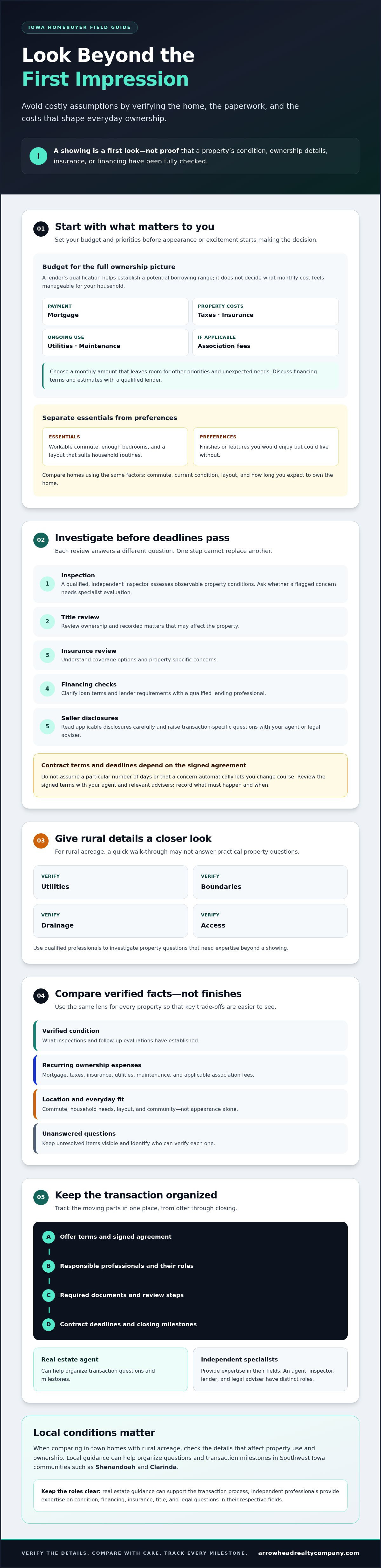
- Common home buying mistakes in Iowa often begin with assumptions. Verify important property details before they become costly surprises.
- Use a showing as a first look, then rely on inspections and document reviews to investigate condition, title, insurance, and financing.
- Compare homes by verified condition, recurring ownership expenses, location fit, and unanswered questions, not appearance alone.
- Track offer terms, responsible professionals, required documents, and deadlines in one place, then follow the signed agreement through closing.
- Local real estate guidance can help organize property questions and transaction milestones, while independent specialists provide expertise in their fields.
Common Home Buying Mistakes in Iowa Start Before You Make an Offer
Preparation can reduce avoidable surprises before you commit to a home. A buying mistake isn’t always a dramatic error. It may be an assumption or a missed check that later affects your finances or the way the property works for you. Some steps are within your control, such as setting a budget and clarifying priorities. Other questions, including property condition and financing terms, call for qualified professionals. Verify important facts before contract deadlines pass.
A purchase involves connected but distinct steps, from offer and contract through closing. This overview of the real estate transaction process can help you see where decisions and deadlines arise. Start by clarifying what you can comfortably afford and what you need from a home.
Mistake 1: Shopping Before Defining a Realistic Budget
A lender’s qualification can help establish a potential borrowing range, but it doesn’t determine what monthly payment feels manageable for your household. Before comparing homes, consider the full ownership picture: mortgage payments, property taxes, homeowners insurance, utilities, maintenance, and any applicable association fees. A home that fits a lender’s criteria may still leave too little room in your personal budget.
List the expenses you expect and choose a monthly amount that leaves room for other priorities and unexpected needs. Ask a qualified lender to explain financing terms, payment estimates, and any questions about your preapproval. Arrowhead Realty Company is a real estate brokerage, not a mortgage lender, so direct financing questions to a qualified lending professional.
Mistake 2: Choosing a Home Before Defining Your Priorities
A striking kitchen or appealing price can distract from the features that shape everyday life. Before touring seriously, separate essentials from preferences. Essentials might include a workable commute, enough bedrooms, or a layout that suits household routines. Preferences may include finishes or features you’d enjoy but could live without.
Compare each property using the same factors: commute, current condition, layout, and how long you expect to own it. A home that suits your plans may be a better fit than one that wins on appearance alone. If you’re considering Shenandoah, use this Shenandoah living guide as you weigh the community alongside the home itself. Clear priorities help you ask focused questions and avoid rushing into an offer for the wrong reasons.
How Iowa Home-Buying Mistakes Happen During Due Diligence
A showing helps you decide whether a home deserves a closer look. It can’t reveal every hidden condition or replace a careful review of property records and purchase documents. Common home buying mistakes in Iowa can happen when buyers treat an encouraging walk-through as proof that every important detail checks out.
Each due-diligence step answers a different question. An inspection assesses observable property conditions. A title review looks for ownership or recorded matters that may affect the property. An insurance review helps you understand coverage options and property-specific concerns. Financing checks address loan terms and lender requirements. Seller disclosures can provide useful context, too. The Iowa State Bar Association explains Iowa seller disclosure requirements. Review the applicable documents carefully and ask your agent or legal adviser about questions specific to your transaction.
Contract contingencies and deadlines depend on the agreement. Don’t assume you have a particular number of days or that a concern automatically allows you to change course. Review the signed terms with your agent and relevant advisers, and keep a written record of what must happen and when.
Mistake 3: Skipping or Misunderstanding the Home Inspection
Arrange an inspection with a qualified, independent inspector. Attend when practical so you can ask questions as findings come up. An inspection can identify conditions that may need further evaluation, but it doesn’t guarantee that repairs won’t be needed later. If the inspector flags a concern, ask whether a specialist should investigate it before you decide how to proceed.
An agent can help you organize transaction questions and deadlines; an inspector assesses the home’s condition. These roles complement each other, but they aren’t interchangeable.
Mistake 4: Treating Rural Property Details as Minor
For a Southwest Iowa home with private or rural features, verify details that affect access and everyday use. Ask what records or evaluations are available for the well, septic system, drainage, and utility arrangements. Confirm property boundaries and easements through appropriate records and qualified professionals rather than relying on fences or informal descriptions.
Radon, flood exposure, and insurance availability are property-specific questions to investigate, not defects to assume. Check relevant records and consult qualified inspection, insurance, or local specialists as appropriate. A local real estate professional can help organize questions and transaction milestones. For a Southwest Iowa home search, connect with Arrowhead Realty Company as one resource alongside independent professional advice.
Compare Iowa Homes by Total Ownership Risk, Not First Impressions
Two homes with similar asking prices can raise different ownership questions. Compare what you can verify: condition, recurring expenses, location fit, and unresolved issues. The goal isn’t to predict every future cost. It’s to identify what still needs checking before you decide.
Mistake 5: Comparing Listing Prices Without Comparing Ownership Costs
Review current property tax information for each home and confirm relevant details with the county. Tax history is useful context, not a guarantee of future bills. An insurance quote is also an estimate based on the information available, not a fixed promise of future premiums or coverage.
Build a side-by-side record of insurance quotes, utilities, immediate maintenance identified during due diligence, and any known association costs. Don’t treat one property’s utility bills, tax history, or insurance quote as a dependable estimate for another. Differences in the home, coverage, services, and location can change the picture.
Mistake 6: Overlooking Location, Title, and Property Records
Visit the area at different times when practical. A quiet daytime showing may not tell you what noise, access, traffic, or daily errands feel like at other hours. For condos, clarify which maintenance responsibilities and costs belong to the owner and which are handled through the association. This Southwest Iowa condo guide can help frame questions as you compare ownership responsibilities.
Review the title commitment and ask an appropriate title professional or legal adviser about easements, recorded restrictions, and other matters that may affect how you use the property. Verify property-specific details through current county records rather than relying on broad Iowa-wide assumptions. These checks can reveal questions that a listing description or showing won’t answer.
Use a comparison table to keep evidence, professional input, and next steps together. If something remains unclear, record it as an open question instead of treating an assumption as fact.
| Issue | Evidence to request | Professional to consult | Follow-up |
|---|---|---|---|
| Condition | Inspection report and relevant repair records | Qualified inspector or specialist | Clarify flagged concerns and any further evaluation needed |
| Taxes and recurring expenses | Current property-specific tax information, insurance quote, utility details, association costs | County office, insurer, utility provider, or association contact | Confirm what each figure covers and whether it may change |
| Location fit | Personal visits and route checks | Buyer, with agent guidance as needed | Revisit at different times and note practical concerns |
| Title and records | Title commitment and available recorded documents | Title professional or legal adviser | Ask about easements, restrictions, and unresolved items |
A Practical Iowa Buyer Checklist for Offers, Inspections, and Closing
A clear system turns a complex purchase into manageable steps. Keep one shared record of questions, the professional responsible for each answer, documents received, and deadlines stated in your signed agreement. Common home buying mistakes in Iowa often happen when buyers rely on memory or assume the same timeline applies to every transaction.
Use this checklist to stay organized, not as a substitute for reviewing your actual contract. Offer terms and contingencies vary by transaction. Discuss proposed terms and timing with your real estate professional and other relevant advisers before signing.
Before Making an Offer: Verify Readiness and Property Facts
- Confirm your readiness. Check your financing status, available funds, and lender-requested documents directly with your lender. Ask about outstanding items before submitting an offer.
- Review the property information. Read available disclosures and listing details. Write down what’s unclear, such as a repair history or unexplained feature, rather than treating missing information as confirmation that there’s no issue.
- Discuss the offer. Review your proposed offer strategy, relevant terms, and potential deadlines with a real estate professional. Make sure you understand what the agreement says before you sign.
After Acceptance: Track Contingencies and Closing Tasks
- Follow the agreement’s timeline. Note each contingency and deadline from the signed contract. Schedule the inspection and any recommended specialist assessments in time to act within the applicable terms.
- Send each question to the right party. Coordinate financing and lender documents with your lender, title questions with the appropriate title professional, and coverage questions with your insurer. Keep responses and completed documents in your transaction record.
- Prepare for closing. Track remaining paperwork and milestones with the professionals handling those steps. If a question or delay arises, raise it promptly instead of assuming it won’t affect the timeline.
- Complete the final walkthrough. Before closing, compare the home’s condition with your expectations and check any repairs or other items the parties agreed to address. Raise discrepancies with your agent promptly.
Considering a home in Shenandoah or another Southwest Iowa community? This Southwest Iowa home-buying guide offers broader local search context. For help exploring residential properties and organizing questions as you compare options, explore homes with Arrowhead Realty Company.
Use Local Guidance to Avoid Home-Buying Mistakes in Southwest Iowa
Local context can help you ask sharper questions as you compare homes, but it shouldn’t replace property-specific verification. In Shenandoah, Clarinda, and other Southwest Iowa communities, a real estate professional can help organize listing information, identify comparable properties to review, coordinate offer communications, and keep transaction milestones visible. Conditions vary from home to home, so local familiarity is a starting point for investigation, not a substitute for evidence.
What a Local Real Estate Professional Can Help You Evaluate
A local agent can help you understand how a listing fits your search, prepare questions for a showing, and coordinate communication as you consider an offer. Familiarity with an area may help flag questions that call for county records or specialist review, such as property boundaries, access, or local services. An agent can help identify who may be best placed to answer and keep track of the follow-up.
Professional roles matter. An agent provides transaction guidance, but doesn’t replace a qualified inspector assessing condition, a title professional reviewing title matters, an insurer evaluating coverage, or a lender addressing financing. Consult an attorney or other qualified adviser when a question calls for their expertise. Keeping these roles clear can help prevent common home buying mistakes in Iowa that arise when buyers rely on one person to verify every part of a purchase.
Choose Your Next Step with Confidence
Before discussing homes, gather a short list of locations you’re considering, must-have features, preferences, budget questions for your lender, and concerns about properties you’ve already seen. Bring the list to a conversation with a real estate professional. It gives you a practical starting point and keeps the search focused on your priorities rather than whichever details stand out during a showing.
Arrowhead Realty Company is a Southwest Iowa brokerage serving residential buyers, including those searching in Shenandoah and Clarinda. Its local perspective can support your home search and help organize questions and transaction steps, alongside independent inspection, title, insurance, and lending expertise. If you’re ready to discuss your search, priorities, or open property questions, connect with Arrowhead Realty Company about Southwest Iowa homes. You don’t need to have every detail settled before starting the conversation.
Make Your Iowa Home Search a Confident One
Common home buying mistakes in Iowa are easier to avoid when you verify property details, compare the full picture of ownership, and organize contract requirements and deadlines. Remember that a showing is only a first look. Inspections, title and insurance reviews, and lender guidance each answer different questions. When comparing homes, weigh verified condition, ongoing expenses, location fit, and unresolved concerns, not just asking price or appearance.
Local guidance can help organize listing questions and transaction milestones, while independent professionals assess condition, title, insurance, and financing. Arrowhead Realty Company provides residential brokerage services in Southwest Iowa, including Shenandoah and Clarinda. Its market reports and property search resources can also support an informed home search.
Bring your priorities and open questions to your next conversation. Talk with a local Southwest Iowa real estate professional as you consider your options. With careful verification and the right expertise for each question, you can move toward a home purchase with greater confidence.
Frequently Asked Questions
Is a home inspection required when buying a house in Iowa?
Whether an inspection is required depends on the contract and transaction, so don’t assume a listing review is enough. Ask about arranging an independent inspection and whether any findings call for specialist follow-up. An inspection can identify conditions to investigate, but it isn’t a warranty or a prediction of every future repair. Check the signed agreement for applicable deadlines and options, and review questions with your agent and qualified advisers before those deadlines pass.
Can I buy a home in Iowa without a real estate agent?
Buyers may have different representation arrangements, but should understand who represents whom and what assistance is included before proceeding. Review offer terms, deadlines, disclosures, and title documents carefully, and ask qualified professionals about anything you don’t understand. An agent doesn’t replace a lender, inspector, attorney, insurer, or other specialist. Since transaction arrangements and responsibilities can vary, discuss the structure of your purchase with the professionals involved rather than relying on assumptions.
What should I check before buying a rural home in Iowa?
Verify the property’s water and wastewater systems, access, utilities, boundaries, easements, drainage, and insurance considerations as applicable. Use qualified inspectors and confirm relevant records with appropriate county offices or professionals. Rural properties differ, so don’t assume a listing has a particular defect or service arrangement. In Southwest Iowa, including areas around Shenandoah and Clarinda, make each item part of property-specific due diligence. These checks can help identify questions before you commit.
Should I waive the inspection contingency to make my Iowa offer stronger?
Waiving or changing an inspection contingency can increase risk, and there’s no single strategy that suits every buyer or property. Before submitting or revising an offer, discuss the possible consequences, alternatives, and deadlines with your real estate professional and, when appropriate, a legal adviser. Read the proposed terms carefully so you understand what protection you may be giving up. Don’t rely on assumptions about what you can do after the offer is accepted.
How do I avoid unexpected property tax costs when buying a home in Iowa?
Review current property tax information for the specific parcel and ask how a change in ownership or assessment could affect future bills. A prior owner’s tax amount is useful background, but it may not predict what you’ll owe. Verify figures through current county sources or with a qualified tax professional. For a fuller ownership budget, also consider the home’s insurance, utilities, and expected maintenance rather than looking at taxes alone.
What happens if an inspection reveals problems after I make an offer?
Your next steps depend on the inspection findings, the signed contract, applicable deadlines, and your priorities. You might seek more information, consult a specialist, or discuss responses allowed by the agreement with your agent. Don’t assume you have an automatic right to cancel or renegotiate. Read the relevant contract terms and get guidance from the appropriate professionals promptly, since waiting could mean a deadline passes before you understand your options.
Do I need to check for radon before buying a home in Iowa?
Radon testing is a property-specific consideration you can discuss with an appropriate qualified professional; don’t assume a home has a particular result. Ask about testing methods, timing, and how to interpret the findings for the property you’re considering. If results raise concerns, seek specialist guidance on possible next steps. Testing provides information about conditions at the time of the test, not a guarantee about future indoor conditions.


