
Could a hidden crack in a dam turn your dream retreat into a six-figure nightmare? It's a question every serious buyer should ask before investing in Iowa land for sale with pond, especially as average values for these properties have reached $19,521 per acre in 2026. You've likely spent years imagining summer evenings fishing for largemouth bass or watching deer emerge from the timber at dusk. We understand that vision because we live it too. However, beneath the surface of that tranquil water lies a complex mix of structural integrity, Iowa DNR compliance, and ecological health that determines if your property is a true asset or a mounting liability.
You deserve a recreational legacy that brings peace of mind rather than constant repairs. This guide provides the essential 2026 checklist to help you master the nuances of pond-front ownership in Southwest Iowa. We'll walk you through the latest dam safety classifications, explain the February 2026 water law updates, and detail the maintenance costs required to keep your ecosystem thriving. From understanding DNR stocking deadlines to evaluating spillway health, you'll gain the local expertise needed to secure a turnkey property that serves your family for generations.
Key Takeaways
- Identify critical red flags in pond infrastructure, such as dam erosion or invasive tree growth, to avoid expensive structural repairs down the road.
- Navigate the latest 2026 DNR hazard classifications and riparian rights to ensure your Iowa land for sale with pond is fully compliant and legally protected.
- Master the science of pond management with specific stocking strategies for bass and bluegill that anchor a successful whitetail hunting plan.
- Execute a rigorous due diligence process using our checklist for Loess Hills soil stability tests and official dam safety verifications.
- Leverage regional expertise in Shenandoah and Clarinda to identify high-value properties that offer long-term recreational and investment potential.
Evaluating Pond Infrastructure and Water Integrity
A pond is more than a scenic feature; it's a high-value engineering project. In Southwest Iowa, a well-maintained recreational pond significantly boosts property value by providing a reliable water source for wildlife and a private sanctuary for your family. When you're browsing Iowa land for sale with pond, you aren't just buying water; you're buying the infrastructure that holds it. A pond is only a recreational asset if the dam is stable and the water quality supports a thriving ecosystem.
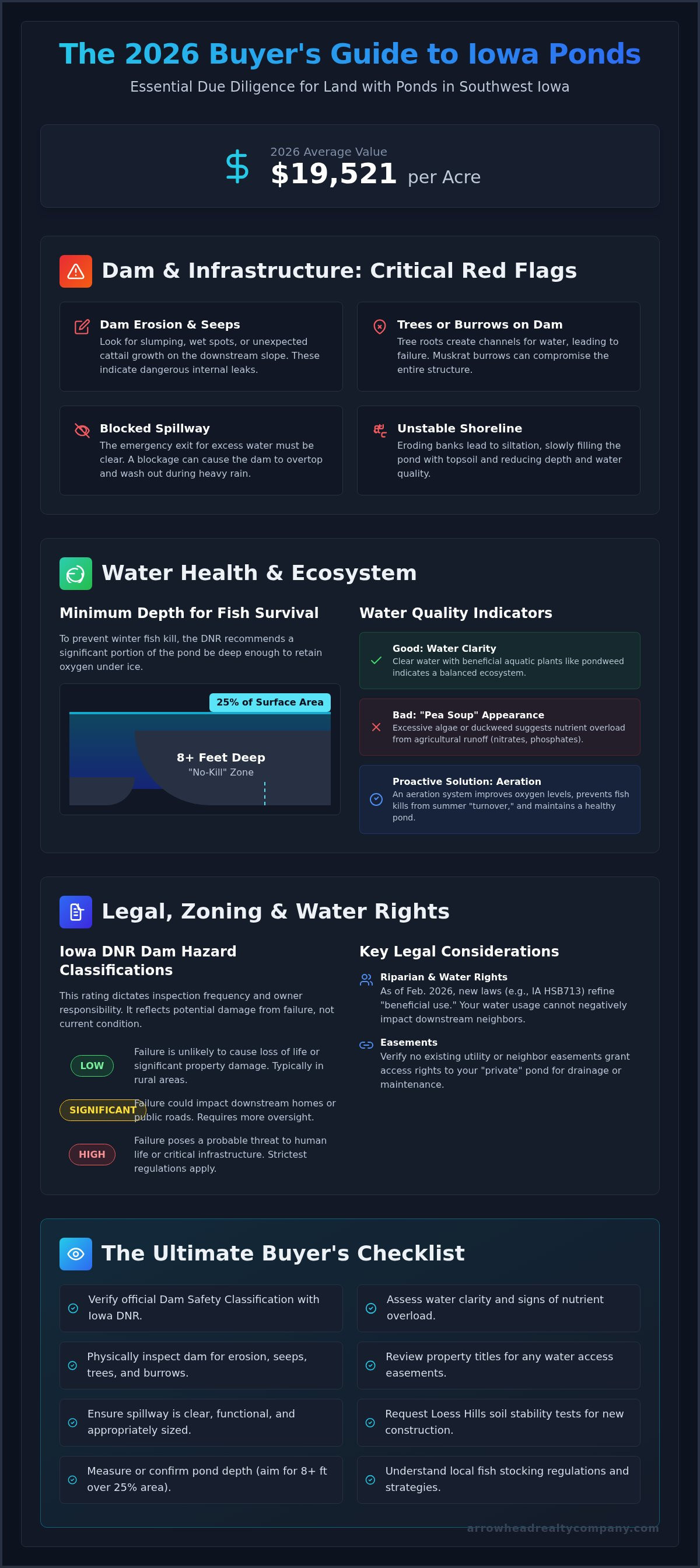
The dam is the heart of the structure and often the most expensive component to repair. Inspect the downstream slope for "seeps," which are wet spots or cattails growing where they shouldn't be. These indicate internal leaks. Trees on a dam are another major red flag. While they look natural, roots eventually die and leave hollow channels that lead to dam failure. Don't overlook the spillway either. This "exit" for excess water must be clear of debris. If a heavy spring rain hits and the spillway is blocked, the water will overtop the dam, potentially washing it away in minutes.
To maintain a healthy fish population through a deep Iowa freeze, depth is non-negotiable. The Iowa DNR recommends a minimum depth of eight feet for at least 25% of the pond's surface area. This creates a "no-kill" zone where oxygen remains high enough for bass and bluegill to survive under thick ice. If the pond is too shallow, you'll face the heartbreak of a total fish kill every few winters.
The Anatomy of a Healthy Iowa Pond
Start by inspecting the dam for slumping or animal burrows. Muskrat holes can compromise the entire structure if left unchecked. Consider the watershed next. A healthy pond needs a balance; too much runoff from treated fields brings silt and chemicals, while too little leaves the pond stagnant. Understanding Riparian water rights is essential here because how you manage your water affects the broader local ecosystem. Evaluate the shoreline for stability. Grass buffers are your best defense against siltation, which is the slow filling of your pond with topsoil.
Water Quality and Clarity Standards
Look for a mix of beneficial aquatic plants like pondweed rather than a surface covered in duckweed or algae. High levels of nitrates and phosphates from agricultural runoff often fuel excessive growth. If the water looks like pea soup, it's a sign of nutrient overload. Installing an aeration system is a proactive step that keeps oxygen levels consistent year-round. This investment prevents the summer "turnover" that can kill off your trophy fish in a single afternoon. When searching for Iowa land for sale with pond, prioritizing water clarity ensures your investment remains a turnkey recreational retreat.
Legalities, Zoning, and Water Rights in Iowa
Owning a private body of water brings unique legal responsibilities that go far beyond standard property boundaries. If you're investigating Iowa land for sale with pond, you'll likely encounter the Iowa Department of Natural Resources (DNR) early in your due diligence. Understanding the regulatory landscape isn't just about compliance; it's about protecting your investment from future litigation or mandatory, high-cost modifications. Legal clarity ensures that your weekend retreat remains a place of relaxation rather than a source of paperwork.
The Iowa DNR classifies dams based on the potential consequences of a failure. A "Low" hazard classification typically means the dam is in a rural area where failure won't likely result in loss of life or significant property damage. However, "Significant" or "High" hazard ratings indicate that a breach could impact homes or public roads. These classifications don't necessarily reflect the current condition of the dam, but they do dictate the level of oversight and the frequency of required professional inspections. Before you sign a contract, verify the classification of any existing structure to anticipate your long-term obligations.
Water rights in Iowa are also evolving. As of February 2026, legislative updates like bill IA HSB713 have refined the definition of "beneficial use," potentially requiring permits for certain surface water withdrawals. While you generally have the right to use water touching your land, these rights aren't absolute. You must ensure your use doesn't negatively impact downstream neighbors. It's also vital to check for existing easements. A "private" pond isn't truly private if a utility company or a neighboring farmer holds a recorded right of access for maintenance or drainage. You can view our latest market reports to see how these legal factors are currently influencing land values in Southwest Iowa.
Navigating Iowa DNR Regulations
If you plan to expand an existing pond or repair a failing dam, you'll almost certainly need a permit. The DNR requires specific engineering standards to ensure that modifications don't increase flood risks for the surrounding community. For classified dams, you may have annual inspection obligations that require a licensed engineer's signature. We recommend checking the DNR's dam safety database during your search to see if a property has a history of compliance issues or outstanding repair orders.
Liability and Recreational Use Statutes
Liability is a common concern for pond owners, but the Iowa Recreational Use Statute provides significant protection. This law generally shields landowners from liability if someone is injured while using the land for recreation without paying a fee. However, you should still consider "attractive nuisance" doctrines, which might require fencing or signage if the pond is easily accessible to children. We always suggest consulting with a local insurance agent to ensure your umbrella policy adequately covers water-related risks on your specific acreage.
Recreational Potential vs. Maintenance Requirements
A pond is a living, breathing entity that requires consistent attention to remain a premier recreational asset. When you're evaluating Iowa land for sale with pond, it's easy to get swept up in the vision of trophy bass and quiet morning mist. However, the most successful landowners understand that a thriving ecosystem is the result of proactive management. You aren't just buying a view; you're taking on a stewardship role that balances the joy of the outdoors with a realistic maintenance budget.
One of the biggest gaps in buyer knowledge involves the "hidden" costs of ownership. Siltation is a slow but steady process. Over several decades, runoff from surrounding high-quality cropland can carry topsoil into your basin, gradually reducing its depth. Dredging is the only way to restore that lost volume, and it's a significant project that requires careful planning. Similarly, neglecting aquatic weed control or failing to clear a clogged spillway can lead to expensive emergency repairs. Accessibility is another practical factor. Ensure you can get a truck or a small boat to the water's edge without getting stuck in soft Loess Hills soil.
For the dedicated hunter, a pond serves as a powerful anchor for whitetail strategy. In Southwest Iowa, a reliable water source creates high-traffic corridors between bedding areas and food plots. By managing the vegetation around the pond, you can create a natural sanctuary that keeps deer on your property year-round. This recreational value is immense, but it depends entirely on the health of the water and the surrounding habitat.
Building a Trophy Fishery in Southwest Iowa
Successful stocking isn't a matter of chance. To build a balanced ecosystem, follow the Iowa DNR's recommended stocking rates: 70 largemouth bass, 1,000 bluegill, and 100 channel catfish per acre. Throwing in "random" fish from other bodies of water can introduce diseases or disrupt the predator-prey balance. Enhance your yields by adding brush piles or rock beds to provide essential cover for fry. If your pond is shallower than the recommended eight-foot "no-kill" zone, installing a winter aeration system is your best defense against oxygen depletion during a heavy freeze.
The Maintenance Calendar for Pond Owners
Stay ahead of issues by following a simple seasonal schedule. In the spring, inspect your spillways and dam for any damage caused by the winter thaw. Summer is the time for managing algae blooms; use targeted treatments early before vegetation chokes the entire surface. When fall arrives, clear away fallen leaves and debris. This prevents organic muck from building up on the bottom, which helps maintain water clarity and oxygen levels for the following year. Consistent care ensures your Iowa land for sale with pond remains a turnkey retreat for generations.
The Ultimate Buyer’s Checklist for Iowa Pond Properties
Success in the land market requires a methodical approach. When you find a promising piece of Iowa land for sale with pond, your excitement shouldn't bypass your due diligence. Moving through a structured checklist ensures you're making a sound investment rather than inheriting a structural headache. We've refined this process based on years of navigating Southwest Iowa transactions to give you a clear path forward.
- Step 1: Verify DNR Status. Confirm the dam's hazard classification and check for any history of non-compliance or required repairs in the state database.
- Step 2: Stability Check. In our unique Loess Hills region, soil stability is everything. Conduct a soil test to ensure the ground can support the dam's weight without excessive settling or shifting.
- Step 3: Watershed Analysis. Trace the water's path. If the pond is fed by heavily treated agricultural fields, you'll need a plan for managing nutrient runoff and potential siltation.
- Step 4: Easement Review. Scrutinize the title for drainage or access easements that could allow third parties onto your shoreline for maintenance or utilities.
- Step 5: Infrastructure Budgeting. Identify immediate needs, such as spillway clearing or brush removal, and factor those costs into your final offer.
Physical Inspection Points
Walk the entire perimeter of the dam and look for red flags. You're searching for "wet spots" or lush, green patches on the downstream side during dry spells; these are classic signs of seepage. Use a weighted line or a sonar unit to measure depth. For a sustainable fishery, you need a minimum of 8 to 10 feet in the deepest sections to prevent winter kill. Finally, inspect both the principal and emergency spillways. Any blockage from logs or debris can lead to a catastrophic failure during a heavy rain event.
Financial and Legal Due Diligence
Request all available maintenance records from the seller. A well-documented history of spillway repairs or fish stocking efforts adds significant value and transparency to the deal. It's also wise to review a professional survey to confirm that the entire body of water sits within the property lines. Boundary disputes over a shared pond are notoriously difficult and expensive to resolve. If you're ready to start your search with a team that understands these nuances, find Iowa land for sale with pond through our advanced property tools. Consulting with a local broker who specializes in Southwest Iowa land ensures you're seeing the full picture of a property's recreational and financial potential.
Securing Your Ideal Southwest Iowa Pond Property
Finding the perfect acreage isn't just about clicking through digital listings. It's about knowing which ponds hold water in a dry July and which dams have been maintained with the care they deserve. When you're ready to find Iowa land for sale with pond, having a partner who knows the soil of Page and Fremont counties makes all the difference. We've spent years building deep relationships in Shenandoah and Clarinda, which often gives our clients access to off-market opportunities that never hit the public portals.
As a United Country franchise, we combine a massive national marketing reach with local roots that go back generations. This means we have the advanced tools to analyze market data while maintaining the "professional-neighborly" feel our clients value. We identify "hidden gem" pond properties by looking past the surface. Our team evaluates the watershed, assesses the dam's age, and considers the potential for habitat improvement before we ever recommend a site. This proactive advocacy ensures you're buying a property with a future, not just a history.
We don't just show you a property; we help you navigate the entire transition. From the first boots-on-the-ground tour to the final handshake at the closing table, we're with you. Securing a premium Iowa land for sale with pond requires a strategy, and we're here to help you execute it with confidence.
The Arrowhead Realty Advantage
We specialize in recreational land for sale Southwest Iowa, ensuring you understand the hunting and fishing potential of every acre. Our team maintains a vetted network of local inspectors and pond management experts who can verify the integrity of a dam before you commit. Whether you're looking for a secluded timber tract or acreage homes for sale Fremont County Iowa, we provide the specialized knowledge required for these complex transactions.
Start Your Search Today
Ready to take the next step? Our online search tools feature specific filters to help you isolate properties with water features quickly. You can also join our "First Look" list to receive notifications about new recreational listings before they're widely advertised to the public. If you're still in the research phase, contact our team for a personalized Southwest Iowa market report to see current land values and trends in your target area. We're ready to help you find the retreat your family has been dreaming of.
Start Your Legacy at the Water’s Edge
Securing high-quality Iowa land for sale with pond represents more than a financial investment; it’s the foundation for a lifetime of memories. By applying the 2026 checklist, you’ve learned to prioritize structural integrity, navigate DNR classifications, and understand the long-term maintenance required for a thriving ecosystem. These steps ensure that your property remains a turnkey asset rather than a project. Whether you’re scouting for trophy bass or establishing a sanctuary for Southwest Iowa whitetails, your due diligence today pays dividends for generations.
When you’re ready to transition from searching to owning, lean on the expertise of a United Country Real Estate affiliate. As Southwest Iowa land specialists with deep roots in Page, Fremont, and Taylor Counties, we provide the localized insight you need to buy with confidence. We’ll help you identify hidden gems and navigate every legal nuance of the transaction with a neighborly, professional touch. Your dream of a private pond retreat is within reach, and we’re here to help you secure it!
Find your perfect Iowa pond property with Arrowhead Realty and take the first step toward your new recreational lifestyle. We look forward to seeing you out on the land!
Frequently Asked Questions
Does a pond increase property value in Iowa?
Yes, a well-maintained pond significantly increases property value by enhancing recreational appeal and providing wildlife habitat. In 2026, the average cost to buy land with a pond in Iowa is $19,521 per acre, which is often higher than comparable tracts without water features. A pond serves as a blue-space anchor that attracts high-end recreational buyers, making it a sound investment for those looking at Iowa land for sale with pond.
What is the minimum depth for a pond to support fish in Iowa?
To support a healthy fish population through Iowa's harsh winters, a pond should have a minimum depth of eight feet over at least 25% of its surface area. This depth creates a critical no-kill zone where oxygen levels remain high enough for bass and bluegill to survive under thick ice. Shallower ponds are prone to oxygen depletion and total winter kills, which can wipe out years of expensive stocking efforts in a single season.
Do I need a permit to build a pond on my Iowa land?
Yes, constructing a new pond or modifying a dam usually requires permits from the Iowa DNR and potentially your local county zoning board. Regulations under Iowa Code Chapter 455B govern water storage and dam safety. You must submit engineering plans to ensure the structure won't increase flood risks for downstream neighbors. It's essential to verify these requirements before starting any excavation to avoid legal penalties or mandatory, high-cost structural removals that can hurt your overall land value.
How much does it cost to maintain a 1-acre pond in Iowa?
While costs vary based on the pond's condition, average annual maintenance for a one-acre pond typically ranges from $500 to $1,500. This budget covers expenses such as aquatic weed control, spillway clearing, and periodic water testing. If you install an aeration system to prevent winter kill, you should also factor in modest monthly electricity costs. Proactive management is much more affordable than the high cost of dredging or emergency dam repairs caused by long-term neglect.
Can I use pond water for irrigation on my farm?
You can use pond water for irrigation, but you must comply with Iowa's water withdrawal regulations. As of February 2026, bill IA HSB713 has updated the definition of beneficial use, and you may need a permit for surface or groundwater withdrawals. Always ensure your irrigation practices don't negatively impact the local watershed or downstream riparian rights. Consulting with a local specialist can help you navigate these specific water use requirements on your Southwest Iowa property.
Is a landowner liable if someone drowns in their pond?
The Iowa Recreational Use Statute generally protects landowners from liability if someone is injured while using the land for recreation without a fee. However, you aren't immune to attractive nuisance claims, particularly regarding children. To minimize risk, we recommend installing clear No Trespassing signs and consulting with your insurance provider about an umbrella policy. Taking these steps protects your financial interests while you enjoy your Iowa land for sale with pond.
What are the common invasive plants in Iowa ponds?
Common invasive species in Iowa include Curly-leaf Pondweed, Eurasian Watermilfoil, and excessive Duckweed. These plants can quickly choke a pond's surface, depleting oxygen and ruining the fishing experience. Identifying these early is vital; they often thrive in ponds with high nutrient runoff from surrounding agricultural fields. Regular monitoring and targeted summer treatments are necessary to keep these aggressive species from overwhelming your recreational ecosystem and damaging the local habitat your wildlife depends on.
How do I check if a dam is on the DNR hazard list?
You can verify a dam's status by searching the Iowa DNR Dam Safety database using the property's legal description or location coordinates. This public record lists dams by their hazard classification: Low, Significant, or High. Checking this database is a critical step in your due diligence process. It reveals whether a structure has a history of safety violations or if it requires mandatory professional inspections that could increase your future ownership costs significantly.


